The D1110 dental code is one of the most frequently billed procedures in dentistry.
A routine adult cleaning is finished, the patient leaves smiling, and the claim is sent to insurance.
A few weeks later, the response arrives: denied.
It happens more often than many dental teams expect. As the CDT code for adult prophylaxis, dental procedure code D1110 is one of the most commonly billed services in dentistry, yet it is also one of the most frequently misunderstood.
The problem usually is not the cleaning itself. It is the details around it: when to use D1110 vs D1120, what documentation insurers require, and how small coding mistakes can lead to denied or reduced claims.
Here you will find a full explanation of the D1110 dental code, how to bill it correctly, how to avoid denials, and how dental practices can improve claim approval and reimbursement.
What Is Dental Procedure Code D1110 and Who Does It Apply To?
Dental procedure code D1110 is the CDT code for adult prophylaxis: a routine cleaning designed to remove plaque, calculus, and stains from tooth surfaces in a patient who has a healthy periodontium or mild gingivitis.
According to the ADA's current CDT guidelines, D1110 applies to patients aged 13 and older with permanent or mixed dentition.
The key word here is preventive. D1110 is not a treatment for disease. It's maintenance for a mouth that is already in good health, or one with only mild, non-destructive inflammation.
The moment a patient's clinical picture shifts to moderate or severe periodontitis, bone loss, or active periodontal disease, D1110 is no longer the right code.
Here's a quick reference for when D1110 is appropriate:
- Patient is 13 years or older
- Dentition is permanent or mixed
- No active periodontal disease or bone loss
- Mild gingivitis may be present, but no destructive periodontitis
- Visit is preventive in nature, not therapeutic
For patients under 13, the correct code is D1120 (child prophylaxis).
And for adults who have already undergone scaling and root planing or periodontal surgery, D4910 (periodontal maintenance) is typically the correct designation, though the distinction between D1110 and D4910 is nuanced enough to warrant its own section below.
What is the Difference Between D1110 vs D1120?
The distinction between D1110 and D1120 is primarily about patient age and dentition stage, not the nature of the procedure itself.
D1110 covers adult prophylaxis for patients aged 13 and older with permanent or transitioning dentition. D1120 covers child prophylaxis for patients up to age 13 with primary or transitioning dentition.
Both codes describe essentially the same clinical procedure: professional removal of plaque, calculus, and stains.
But insurance carriers treat them differently in terms of benefit eligibility and frequency limits. Billing D1110 for a 10-year-old, or D1120 for a teenager, will likely trigger a denial.
Always verify the patient's date of birth and cross-reference with the insurer's age-based eligibility rules before submitting.
One practical note: the age of 13 isn't always a hard cutoff in every payer's system. Some carriers shift the eligibility from D1120 to D1110 based on dentition stage rather than strict calendar age.
When in doubt, verify with the payer or note the dentition type clearly in your documentation.
What Are the Best Practices for D1110 Claim Submission in the US?
Strong documentation is what separates a paid D1110 claim from a denied one. Insurers want to see that the code selection is clinically justified and that the visit was genuinely preventive.
On the administrative side, best practices include:
- Verify frequency limitations before the appointment. Most plans cover D1110 twice per calendar year, though some use a rolling 6-month window. Submitting too early is a common, easily preventable denial.
- Confirm age-based eligibility. Make sure the patient's date of birth aligns with the D1110 age requirement under the specific payer's policy.
- Submit clean, complete claims the first time. Incomplete NPI information, missing procedure dates, or absent clinical notes are leading causes of unnecessary delays.
- Monitor EOBs actively. When reimbursements come back lower than expected, review immediately. Underpayments on D1110 are common and often go unchallenged.
- Keep a denial log by code. Tracking D1110 denials specifically helps you identify patterns, whether that's a documentation gap, a payer-specific quirk, or a credentialing issue.
How Do You Correctly Distinguish D1110 From D4910?
This is where a significant amount of revenue leaks out of dental practices, and it's the most important clinical coding judgment your team will make.
D1110 is preventive. It's for the healthy or near-healthy adult mouth. D4910 is therapeutic maintenance. It's for the patient who has already been treated for periodontal disease, specifically those who have had scaling and root planing (D4341/D4342) or osseous surgery.
ADA CDT guidance notes that prophylaxis and periodontal maintenance serve different clinical purposes, and the appropriate code depends on the patient's current periodontal condition.
A practical tip for navigating payer limitations: if a patient clinically requires D4910 but their benefits are exhausted, include this narrative in your claim: "If benefits are not available for D4910, please pay the alternate benefit of D1110."
This allows you to code correctly while helping the patient maximize their coverage.
Coding D1110 when D4910 is clinically appropriate isn't just a compliance risk. It's a documentation liability that can affect future treatment plans, audit trails, and even patient outcomes if disease progression is masked by inaccurate coding.
Do You Need ICD-10 Codes for D1110?
While CDT codes describe the procedure, ICD-10 codes describe the diagnosis. Many payers do not require ICD-10 codes for preventive dental procedures like D1110, though some practices include them based on payer or workflow preferences.
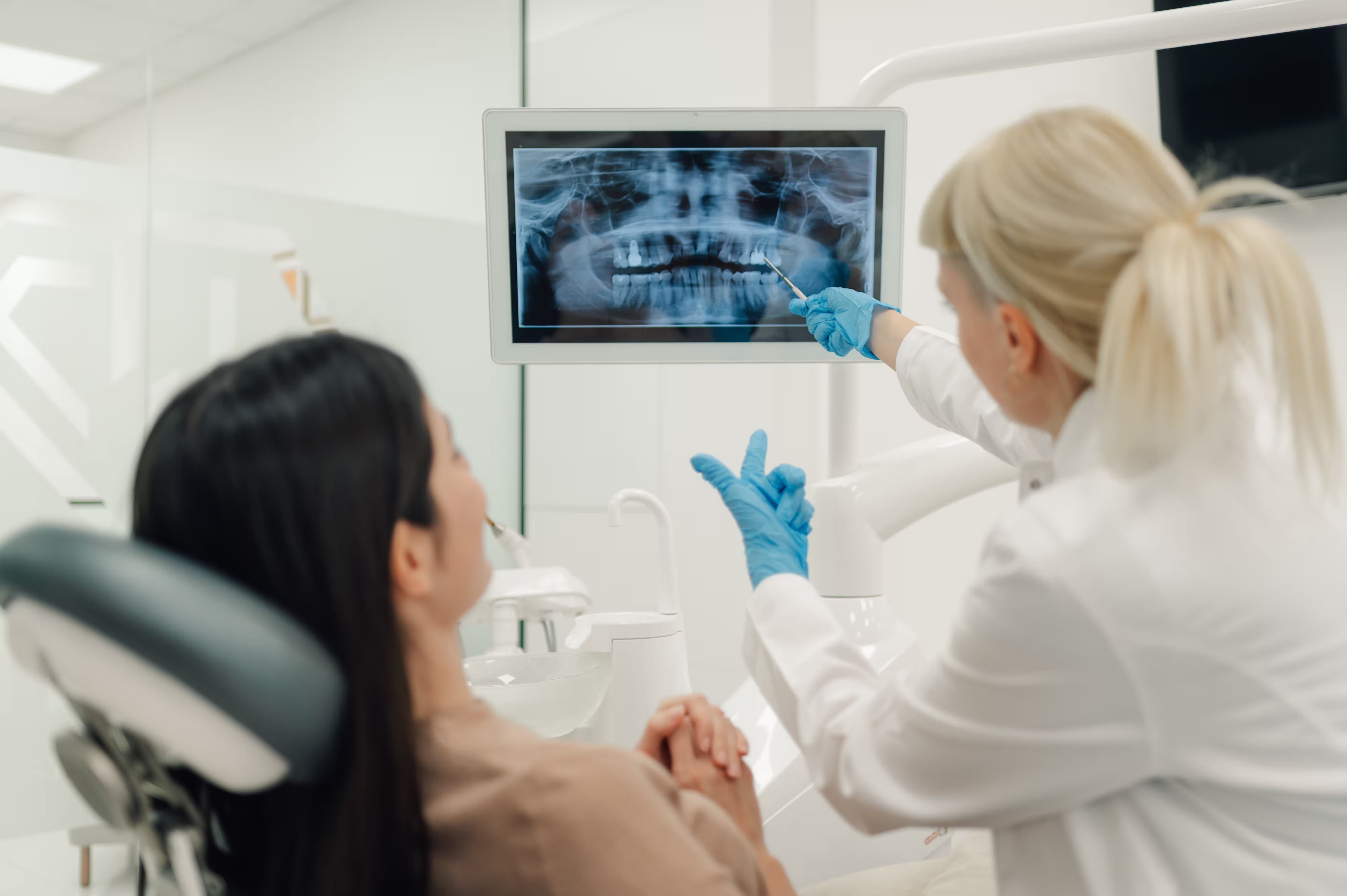
In addition to D1110, practices may also bill related CDT procedure codes when clinically indicated. For example, D0330 dental code covers panoramic radiographic imaging, while intraoral bitewing radiographs are reported using separate codes (e.g., D0272–D0274), as they are distinct types of X-rays.
Pairing D1110 with Supporting Documentation
For straightforward adult prophylaxis, the strongest protection against a "lack of medical necessity" denial comes from thorough clinical documentation. Focus on recording:
- Probing depths and bleeding on probing
- Plaque and calculus levels
- Gingival tissue description
- Date of last prophylaxis
- Any notable changes from the previous visit
How Can You Appeal a Denied D1110 Dental Claim?
A denied D1110 claim isn't a final answer. It's a starting point. Most denials fall into a handful of categories, each with a clear path to resolution:
Frequency limitation denial: The claim was submitted too soon based on the payer's 6-month or calendar-year rule. Solution: verify the patient's last date of service with the payer, reschedule if needed.
Age or eligibility mismatch: The patient's age in the claim doesn't align with the payer's D1110 eligibility criteria. Solution: confirm the date of birth on file, verify payer age thresholds, and resubmit with corrected demographics if applicable.
Lack of medical necessity: The payer is questioning whether the procedure was clinically appropriate. Solution: submit a letter of medical necessity with periodontal charting, clinical notes, and documentation confirming the absence of active periodontal disease.
Wrong code applied: D1110 was submitted for a patient who clinically required D4910 or D4346. Solution: correct the code, update documentation to reflect accurate clinical findings, and resubmit with a narrative explaining the correction.
When appealing, always respond within the payer's stated appeal window (typically 90-180 days from the denial date), keep a copy of every appeal submission, and follow up proactively if you don't receive a response within 30 days.
How Can You Ensure Compliance When Billing D1110?
Compliance in D1110 billing isn't just about avoiding audits. It's about protecting your practice's reputation and your patients' trust. Key compliance considerations include:
- Code to the clinical findings, not the reimbursement. Billing D1110 when D4910 or D4346 is clinically appropriate is a compliance risk that carries real audit exposure.
- Maintain accurate, contemporaneous documentation. Notes should be written at the time of service and reflect exactly what was done and why the code was selected.
- Stay current with CDT updates. The ADA updates CDT codes annually. There are over 800 active codes as of 2026, and D1110's descriptor and application guidelines can evolve.
- Train your hygiene team on coding criteria. The person performing the procedure should understand the clinical thresholds that determine D1110 versus D4346 versus D4910.
- Conduct periodic internal billing audits. A quarterly review of your D1110 claims against your clinical records catches drift before it becomes a pattern.
HIPAA compliance also touches billing: make sure any software or third-party service handling patient claim data is fully HIPAA-compliant and that your business associate agreements are current.
What are the Advantages of Using Remote Dental Billing Services?
Many dental practices start with in-house billing because it feels like the safest, most controlled option. But as claim volume grows, staff turnover happens, or denials pile up, that control can quickly turn into a bottleneck.
Remote dental billing services - experienced teams working virtually but fully integrated with your practice solve many of these pain points without requiring you to hire, train, or manage another full-time employee.
Here are the key advantages we see most often:
- Reduces administrative burden and staff burnout - Front desk and clinical teams no longer juggle scheduling, patient questions, and claim follow-up. Billing gets handled by specialists who do it every day.
- Improves first-pass claim acceptance and faster reimbursements - Remote teams use advanced scrubbing tools, payer-specific knowledge, and proactive verification to catch errors before submission.
- Lowers aging AR - Many practices see a 50%+ reduction in 90+ day accounts receivable within the first six months because remote billers chase unpaid claims aggressively and consistently.
- Expert handling of complex denials and follow-ups - Denied claims get appealed with the right documentation, narratives, and persistence - something busy in-house staff rarely have time for.
- HIPAA-compliant with secure remote workflows - Reputable remote services use encrypted systems, strict access controls, and current business associate agreements to protect patient data.
- Cost-effective compared to a full-time in-house biller - You pay for results rather than salary, benefits, training, and software licenses, often at a lower total cost.
- Frees your team to focus on patients - Less time on billing stress means more energy for care, case acceptance, and practice growth.
Many practices find these benefits through experienced remote partners like Wisdom, whose US-based specialists act as a true extension of the team.
How Does Remote Dental Billing Help Reduce Claims Aging?
Claims aging refers to insurance claims that remain unpaid beyond 30, 60, or 90 days. Once a claim hits 90+ days, the likelihood of full reimbursement drops sharply, cash flow suffers, and bad debt risk rises.
Remote dental billing teams are particularly effective at preventing and reversing aging because they treat AR management as their primary job, not a side task squeezed between phone calls and check-ins.
By focusing on AR aging, these teams help practices maintain healthier cash flow and reduce the risk of long-standing unpaid claims.
Here’s how they make the difference:
- Proactive follow-up and weekly aging report management - Instead of checking AR monthly (or when someone has time), remote billers review aging reports every week, prioritizing older claims first.
- Persistent resubmission and appeal work - They track every outstanding claim, resubmit corrected versions quickly, and pursue appeals with complete documentation and payer-specific arguments.
- Faster resolution than busy in-house staff - In-house teams often get pulled away by daily emergencies; remote specialists stay focused on clearing the backlog consistently.
- Typical results - Practices frequently see faster payments across the board and significantly lower bad debt write-offs, with many reporting noticeable improvements in cash flow within the first few months.
When aging AR is under control, reimbursements arrive predictably, payroll becomes easier to meet, and the practice can invest in growth instead of playing catch-up.
Wisdom: Dental Billing Done Right, Every Time
If D1110 denials, documentation gaps, or aging receivables sound familiar, you don't have to sort it out alone. Wisdom pairs your practice with experienced US-based dental billing specialists who know the CDT codes, the payers, and the nuances that make the difference between a clean claim and a costly one.
Clients see up to a 50% reduction in 90+ day AR within the first six months, a 98%+ rate of increased insurance billing revenue, and a team that functions as a true extension of your practice. Less billing stress, more time for patients. That's what Wisdom is built for.