Trying to make sense of dental billing codes can easily start to feel like a full-time job.
You and your dental team are dedicated to providing excellent patient care, but the administrative burden of dealing with insurance claims, coding nuances, and compliance can be overwhelming.
One code that frequently comes up with questions is the d0330 dental code, used for panoramic radiographic images.
Getting this code right is more than just an administrative detail, it directly impacts your practice's revenue and compliance.
Incorrect usage can lead to denied claims, delayed payments, and even audits. This guide will provide a clear and comprehensive overview of the d0330 dental code, helping your team use it accurately and confidently.
What is Dental Code D0330?
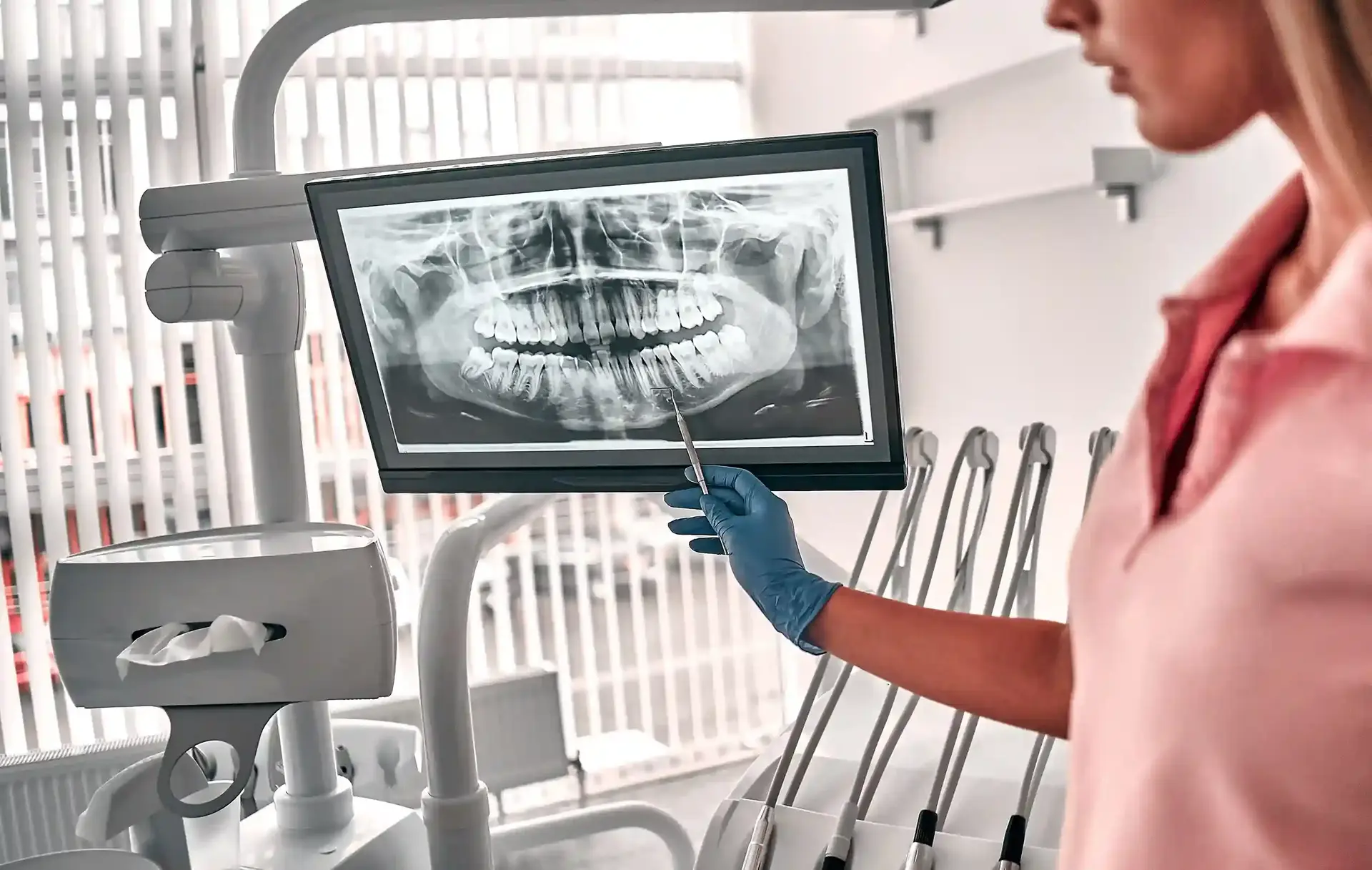
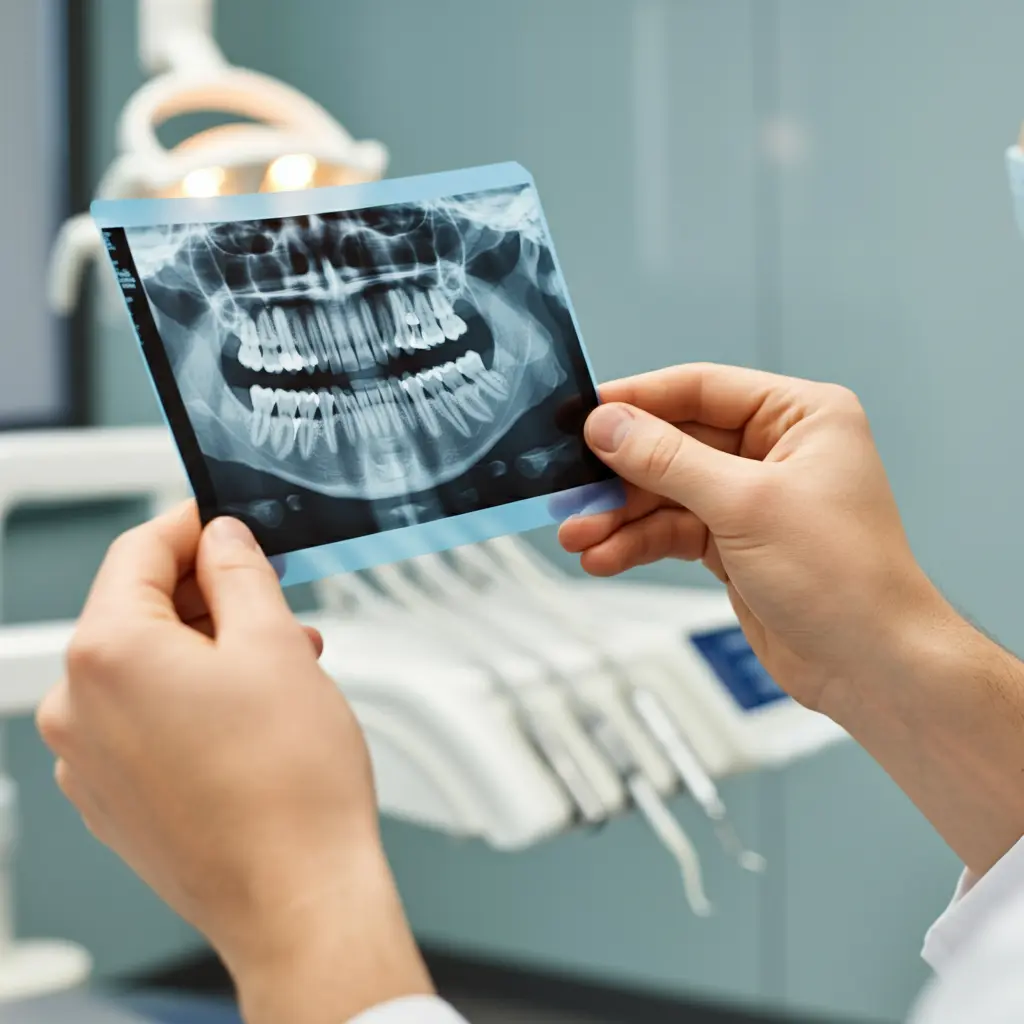
The d0330 dental code is the designated CDT code for a panoramic radiographic image.
Commonly known as a panoramic X-ray, this is an extra-oral procedure, meaning the image is captured from outside the mouth.
The result is a single, two-dimensional image that provides a broad, comprehensive view of the patient's entire oral structure.
This includes all teeth in both the upper and lower jaws, the jawbones themselves (maxilla and mandible), and surrounding tissues and structures like the temporomandibular joints (TMJ) and maxillary sinuses.
Unlike intraoral X-rays, such as bitewings or periapical films which provide detailed views of small, specific areas, the panoramic X-ray offers a wide-ranging overview.
This makes it an invaluable diagnostic tool for assessing broad dental and skeletal issues rather than for detecting localized problems like interproximal cavities.
Understanding the d0330 dental code definition is the first step. The official description specifies "panoramic radiographic image," and it's crucial not to confuse this with other imaging codes, particularly a full mouth series (FMX) of intraoral X-rays (D0210).
While both can be part of a new patient evaluation, they are distinct procedures with different clinical justifications and billing requirements.
When is Dental Code D0330 Justified?
The key to successful reimbursement for dental procedure code d0330 is clinical necessity. Insurance payors need to see a clear, documented reason for why a panoramic X-ray was required for diagnosis or treatment planning.
Simply taking a panoramic image as a standard part of every new patient exam without specific justification is a common reason for claim denials.
The dentist must order the panoramic X-ray based on an individual patient evaluation. The justification for the image must always be recorded in the patient's clinical notes.
Here are common clinical scenarios where using the d0330 dental code is typically justified:
Evaluating Growth and Development
Panoramic X-rays are especially useful for pediatric and adolescent patients. They provide a clear view of tooth eruption patterns, the development of permanent teeth, and the presence of any developmental anomalies.
This is critical for early orthodontic intervention and monitoring jaw growth.
Assessing Impacted Teeth
The most common use is for evaluating third molars, or wisdom teeth. A panoramic image shows their position, orientation, and proximity to nerves and other vital structures, which is essential for planning extractions.
It can also identify other impacted teeth, such as canines.
Planning for Surgery
Before performing surgical procedures like implant placement or complex extractions, a panoramic view helps the clinician assess bone structure, density, and the location of anatomical landmarks.
This comprehensive view is vital for ensuring a successful and safe surgical outcome.
Orthodontic Assessment
For orthodontic treatment planning, a panoramic X-ray provides a complete picture of the patient's dentition, jaw alignment, and any underlying issues that could affect treatment. It helps orthodontists create a comprehensive plan for braces or other appliances.
Detecting Pathology
Panoramic images are excellent for screening for a wide range of pathologies that might not be visible on smaller X-rays. This includes cysts, tumors, jaw fractures, and other bone abnormalities.
Evaluating Trauma
In cases of facial trauma, a panoramic X-ray can quickly assess for fractures of the jaw, condyles, and other facial bones, providing a comprehensive diagnostic overview in an emergency situation.
For Patients Unable to Tolerate Intraoral Films
Some patients have a severe gag reflex, trismus (lockjaw), or other disabilities that make it impossible to take intraoral X-rays. In these cases, a panoramic image may be the only viable option for obtaining necessary diagnostic information
When Should a Panoramic Radiograph (D0330) be Used?
A panoramic radiograph is appropriate whenever the dentist needs a comprehensive, single-view assessment of the teeth, jaws, or surrounding structures.
Common indications include evaluating wisdom teeth, planning surgery, assessing growth and development, screening for pathology, reviewing orthodontic concerns, or when patients cannot tolerate intraoral films.
Insurers look for clear clinical justification, so use D0330 only when the full-mouth overview adds diagnostic value beyond traditional intraoral images.
How to Document for D0330 to Ensure Reimbursement
Accurate and detailed documentation is your best defense against claim denials. When you submit a claim with the d0330 dental code, your clinical notes must paint a clear picture of why the procedure was necessary.
Here’s what your documentation should always include:
- A Clear Order from the Dentist: The patient's record should show that the dentist ordered the panoramic radiograph after a clinical evaluation.
- Specific Clinical Justification: Don't use generic phrases. State the exact reason for the X-ray. For example, instead of "new patient exam," write "Evaluation of third molar positioning and rule out pathology" or "Orthodontic assessment for crowded dentition."
- Detailed Findings: After interpreting the image, document your findings (or lack thereof). Note any abnormalities, impacted teeth, bone loss, or other relevant observations. If the image confirms the absence of pathology, that is also a valid finding to document.
- Date and Labeling: Ensure every radiograph is clearly dated and properly labeled in the patient’s record.
Example of Strong vs. Weak Documentation
- Weak Documentation: "New patient, took pano."
- Strong Documentation: "Patient (17M) presents for initial exam. Reports no pain but is concerned about wisdom teeth. Clinical exam reveals partially erupted #17 and #32. Ordered panoramic radiograph to assess position, development, and proximity to the inferior alveolar nerve prior to extraction planning. Image reveals mesioangular impaction of #17 and horizontal impaction of #32. Referral to oral surgeon discussed with patient."
This level of detail leaves no room for ambiguity and provides payors with the clear medical necessity they require for reimbursement.
How do I Bill D0330 Correctly?
To bill D0330 correctly, ensure three elements are in place: clinical necessity, accurate documentation, and proper coding without bundling errors.
Submit D0330 only when the panoramic image was ordered after an evaluation and supported by specific clinical findings or concerns.
Bill D0330 as a standalone code unless a payor’s policy states otherwise, and avoid substituting it for a full mouth series.
Finally, confirm frequency limits and coverage rules before submitting the claim to minimize preventable denials.
If your team struggles with these requirements, consulting a dental billing expert can help ensure accurate coding and reduce claim denials.
Common Billing Errors and Insurance Limitations
Even with perfect documentation, dental teams can run into issues with the d0330 dental code due to common billing errors and insurance plan limitations.
Frequency Limitations
Most dental insurance plans impose a frequency limitation on panoramic radiographs, typically allowing one every 3 to 5 years.
If a patient has had a panoramic image taken within this period (even at a different practice), your claim will likely be denied unless you can provide documentation of a specific new condition, such as recent trauma, that necessitates a new image.
Always verify the patient's insurance benefits and history before taking the X-ray.
Performing thorough dental insurance verification before the appointment helps prevent unexpected denials and ensures you understand the patient’s eligibility for D0330.
Bundling and Unbundling Issues
One of the most frequent errors is improper bundling or unbundling of codes. Some practices take a panoramic X-ray and bitewings (D0272, D0274) but bill for a full mouth series (D0210). This is considered improper upcoding and can be flagged as fraudulent billing.
You must code for the procedures you perform. If you take a panoramic image and bitewings, you should bill for D0330 and the appropriate bitewing codes separately. Be aware of how different insurance payors handle this. Some may:
- Pay for both D0330 and the bitewings.
- Pay for D0330 but deny the bitewings as inclusive.
- "Remap" the codes to D0210 and pay the (often lower) fee for a comprehensive series.
To avoid issues, consider scheduling the panoramic X-ray and bitewings on different dates when clinically appropriate, though this is not always practical.
The Cost of D0330
The d0330 dental code cost can vary significantly based on your geographic location and your practice's fee schedule. It's essential to set a fair and competitive fee for the procedure. When discussing treatment with patients, be transparent about the cost and their likely out-of-pocket expenses after insurance.
Explaining why the X-ray is necessary can help patients understand the value and importance of the diagnostic tool, making them more comfortable with the cost.
Does Insurance Usually Cover D0330 Panoramic X-rays?
Most dental insurance plans do cover D0330, but typically under strict frequency limitations - often once every 3–5 years. Coverage also varies based on age, diagnosis, and whether a specific clinical concern is documented.
If a pano was performed at another office recently, insurers may automatically deny the claim unless a new condition (such as trauma or pathology) justifies another image. Always verify eligibility in advance and inform patients when out-of-pocket costs may apply.
Take Control of Your Dental Billing
Mastering codes like D0330 is essential for maintaining a healthy revenue cycle in your dental practice. When your team understands the nuances of when and how to use this code, you reduce claim denials, improve cash flow, and ensure compliance.
However, keeping up with every code, payor rule, and documentation requirement can feel like an impossible task, especially when your primary focus is patient care. Many practices find that claim denials continue to pile up despite their best efforts, leading to lost revenue and frustrated staff.
If you're tired of chasing down insurance companies and want to ensure you're getting paid fully for the work you do, it might be time to seek an expert dental billing company.