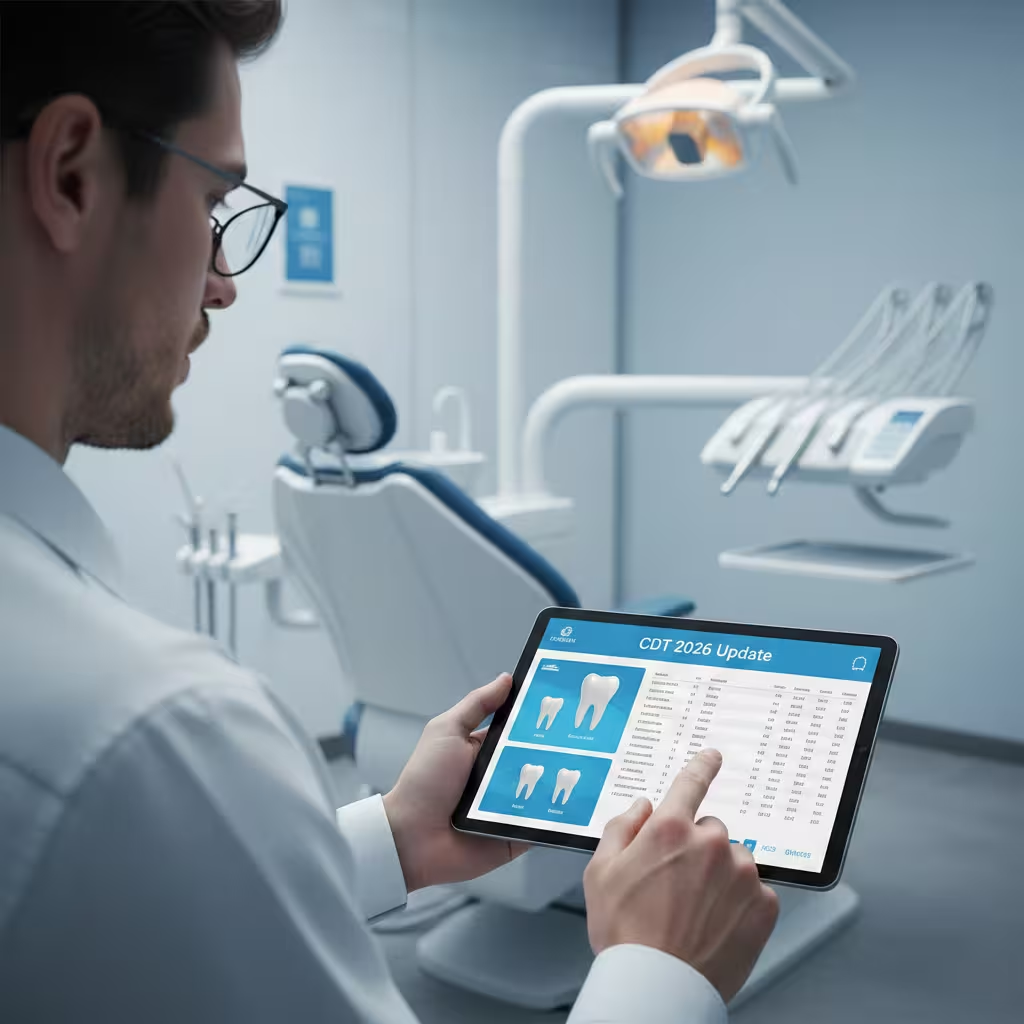
As a dental professional, you know how quickly things evolve in patient care, and coding has to keep pace.
The 2026 CDT code updates from the American Dental Association bring meaningful refinements that can make your practice run smoother, reduce claim headaches, and help you get paid accurately for the excellent work you do every day.
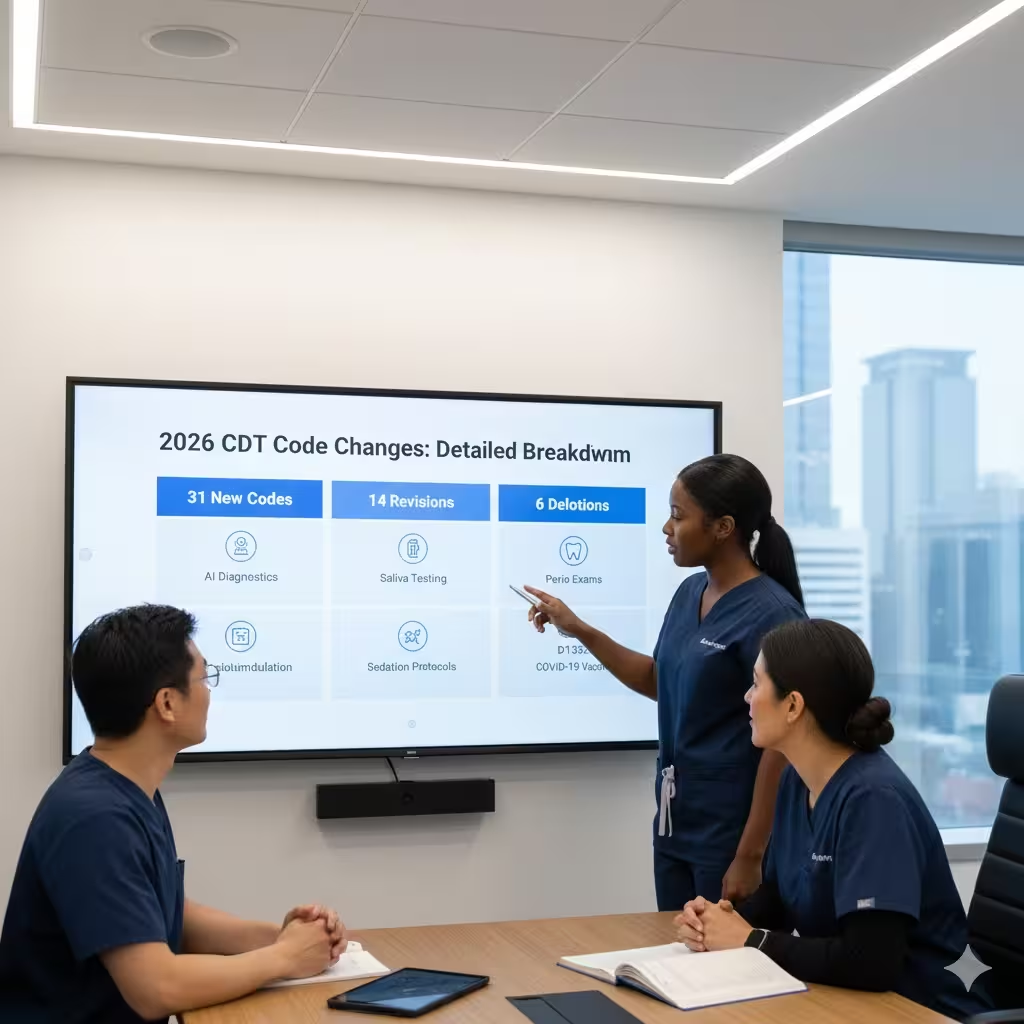
With 60 total changes (31 new codes, 14 revisions, 6 deletions, and 9 editorial updates), the focus is on clarity, specificity, and alignment with modern procedures like advanced diagnostics, implant maintenance, and sedation protocols. Dental billing experts at Wisdom can help your practice implement these 2026 CDT updates smoothly, reducing denials and optimizing reimbursements.
Let's break it down so you can implement these changes confidently.
What Are CDT Codes and Why Are They Important for Dental Practices?
CDT codes (Current Dental Terminology) are the standardized dental procedure codes maintained by the ADA. They serve as the universal language for describing dental services, from routine cleanings to complex oral surgeries.
Accurate CDT coding ensures claims are processed correctly by insurance carriers. This reduces denials, delays, and underpayments.
CDT codes support HIPAA compliance (as the required code set for dental claims), help track practice performance, and improve patient communication by clearly documenting services.
When codes are outdated or mismatched, practices can lose significant revenue each year and face audit risks. Getting them right builds trust with patients and payers, so you can focus more on care and less on paperwork.
What Are the Key Changes in 2026 CDT Codes?
The 2026 CDT code updates reflect evolving clinical realities. They remove redundancies and add precision for services dentists perform regularly.
New Codes (31 Additions)
These cover emerging and specific needs:
- Diagnostic advancements: D0461 (testing for cracked tooth, including multiple teeth and contralateral comparisons) and D0426 (point-of-care saliva sample collection, preparation, and analysis for risk assessment).
- Implant and peri-implant care: D6049 (scaling and debridement of a single implant with peri-implantitis, without flap entry) and D6280 (maintenance for full arch removable implant-supported dentures, including cleansing).
- Prosthetics and maxillofacial: Several additions for duplication of dentures (D5877 maxillary, D5878 mandibular) and resection/guidance prostheses.
- Adjunctive services: Photobiomodulation therapy (D9128/D9129 for pain/inflammation management in increments), new sedation/anesthesia codes (D9244 minimal sedation enteral, time-based moderate sedation like D9246/D9247 non-IV parenteral), D1720 (influenza vaccine administration), and D9936 (occlusal guard cleaning/inspection).
Revisions (14 Changes)
These clarify language and improve usability:
- D0180 (comprehensive periodontal evaluation) now emphasizes full-mouth focus.
- D2391 (resin-based composite one-surface posterior) removes lesion depth references for simpler application.
- Anesthesia updates (D9230 nitrous oxide as single agent, deep sedation revisions) eliminate outdated terms.
- Biopsy codes (D7285/D7286) and others refined for greater precision.
Deletions (6 Codes Removed)
These simplify and refine the code set:
- D1352 (preventive resin in high-caries-risk permanent teeth) overlaps with composites.
- COVID-19 vaccine codes (D1705–D1712) and D9248 (non-IV conscious sedation) were removed as obsolete.
Editorial Changes (9 Updates)
These tidy descriptors (for example, overdenture and bone graft codes).
These updates promote better documentation, fewer ambiguities, and better alignment with current practices, such as saliva testing for personalized prevention or photobiomodulation for non-invasive healing.
How Do 2026 CDT Code Updates Affect Dental Insurance Claims?
The 2026 CDT changes directly impact claims processing, reimbursement, and cash flow.
New specificity (for example, D6049 for targeted peri-implantitis debridement) allows more accurate reporting. This can improve approval rates for implant-related services that were previously bundled or denied.
Revised sedation codes provide granular billing for time and route, helping justify medical necessity and reducing downcoding risks.
Deletions require switching to alternative codes (for example, composites for former preventive resins). Using outdated codes after January 1, 2026, could lead to rejections. Revisions like D2391 simplify submissions by removing unnecessary distinctions.
Practices that update early avoid disruptions. Update your practice management software, train staff on new descriptors, and review payer policies.
This prevents revenue loss from denials and supports compliant, efficient dental billing. We know claim hassles add stress; these changes aim to lighten that load when implemented thoughtfully.
Effective management of AR aging allows practices to spot overdue claims early, prioritize follow-ups, and protect cash flow, especially important during major CDT code transitions.
Where Can Dental Practices Find Official 2026 CDT Code Changes?
The definitive source is the ADA. The ADA store offers bundles with companions for scenarios and Q&A.
For quick overviews, check ADA News articles that detail new, revised, and deleted codes. Insurers like Delta Dental provide summaries along with their processing policies. Always cross-reference the official ADA version, as it is the HIPAA standard.

Subscribe to ADA updates or join coding webinars to stay ahead. Many practices regret waiting until claims start bouncing.
What Should Dental Practices Do First to Prepare for the 2026 CDT Code Changes?
The transition to 2026 CDT codes starts now, don't wait for January claims to pile up.
Begin by securing the official CDT 2026 resources from the ADA and confirming your practice management software vendor has rolled out the full update (including all 31 new codes like D0461 for cracked tooth testing and D0426 for point-of-care saliva analysis).
Up-to-date dental billing software plays a key role in automatically incorporating new CDT codes, updating master fee schedules in the PMS, flagging mismatches, and preventing claim rejections during annual transitions.
Next, run an internal audit: Review your last 3-6 months of claims to identify any reliance on deleted codes (such as D1352 preventive resin or D9248 non-IV conscious sedation) and map them to valid alternatives right away.
Update superbills, templates, and fee schedules to reflect revisions (for example, the simplified D2391 resin-based composite descriptor).
Involve your team early, schedule brief training huddles and create quick-reference guides for high-use areas like new implant maintenance (D6280) or photobiomodulation therapy (D9128/D9129).
Early preparation minimizes disruptions, prevents revenue dips from denied claims, and lets you focus on patient care with confidence.
Accurate dental bookkeeping ensures clear tracking of income, expenses, and financial transactions, providing the foundation for sound decision-making and long-term practice stability.
What Common Pitfalls Should Dental Practices Avoid with the New 2026 CDT Codes?
Even experienced teams can stumble during updates. A top mistake is submitting claims with deleted codes after January 1, 2026, payers reject them outright, causing delays and rework.
Another is under-documenting new granular services; for instance, vague notes for D6049 (peri-implantitis scaling without flap) or time-based sedation (D9246/D9247) often lead to downcoding or denials.
Overlooking payer-specific policies is also common - Delta Dental and others updated rules for D0180 perio evaluations, bone grafts, and new additions like D1720 influenza vaccine. Always cross-check.
To sidestep these: Double-check medical necessity in charts, use software flags for mismatches, and audit a sample of post-update claims monthly.
These habits reduce stress, protect cash flow, and keep your CDT coding accurate and compliant.
How Do the 2026 CDT Code Updates Improve Patient Care and Treatment Planning?
Beyond billing, these current dental terminology code enhancements support better, more personalized dentistry.
New diagnostic tools like D0461 (cracked tooth testing across multiple teeth) and D0426 (point-of-care saliva analysis) enable earlier, precise identification of issues, helping prevent escalation and tailor preventive plans.
Adjunctive additions such as photobiomodulation (D9128/D9129) offer non-invasive options for pain and healing, while clearer implant codes (D6049, D6280) improve tracking of maintenance needs.
Patients benefit from transparent explanations: "We're using this specific code for your saliva risk assessment to customize your prevention strategy."
Overall, accurate dental procedure codes reduce billing surprises, build trust through clear communication, and align documentation with modern, evidence-based care, making your practice more patient-centered and efficient.

How Wisdom Helps Dental Practices Navigate 2026 CDT Code Updates and Beyond
Staying on top of CDT codes should not pull you away from patients. At Wisdom, we specialize in empowering dental practices with AI-driven tools that simplify billing, and compliance.
This means fewer denials, faster reimbursements, and more time for compassionate care. Practices using Wisdom report reduced claim rework by up to 40% and greater peace of mind knowing they are compliant and optimized.